Fifteen Seconds of Fame: How Birthday Videos Became 2026's Weirdest Celebrity Economy
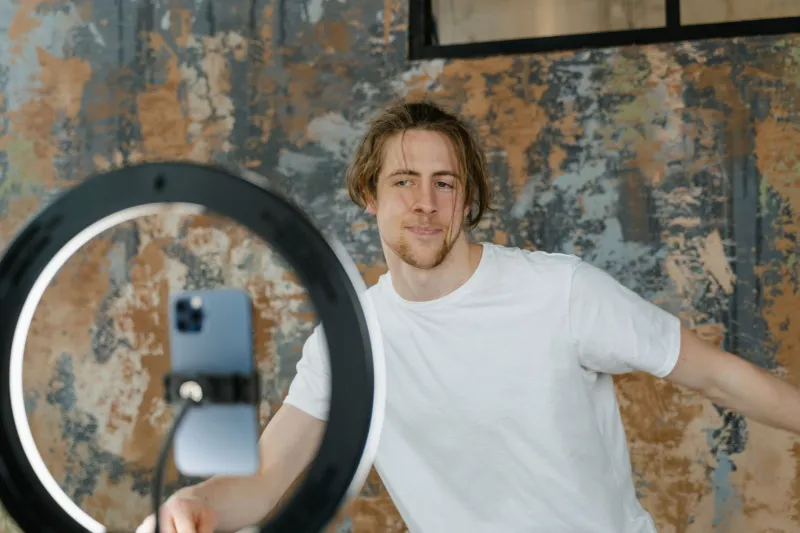
There was a time when a celebrity birthday shout-out meant you knew someone who knew someone, or you got lucky at a convention, or your cousin's roommate had a brief interaction with a sitcom actor at an airport. In 2026, it means you open an app, choose a name, pick a price point, and wait for a ring-lit video of a person you have seen on television saying 'Happy birthday, Dave' with varying degrees of enthusiasm.
Personalized video apps—Cameo and its many imitators—have turned the micro-shoutout into a visible celebrity economy. The format is simple: 15 to 60 seconds, one name, one occasion, one camera angle that says 'I am doing this in my kitchen but I have a ring light.' The result is a strange, sweet, occasionally unhinged marketplace where canceled cult-show alums, reality TV villains, retired athletes, soap stars, and niche internet personalities sell a slice of recognition to strangers.
The Birthday Video Industrial Complex
The pricing is all over the place. Some names charge $25. Some charge $500. A few charge enough to make you wonder if the video comes with a signed headshot and a tax consultation. The platform takes a cut, the celebrity takes the rest, and the buyer gets a video that will almost certainly be shown at a birthday dinner to a room of people who are either delighted or deeply confused.
What makes 2026 different is how normalized the whole thing has become. It is no longer a novelty or a punchline. It is a side hustle, a fan-service channel, and a way for actors between projects to monetize the one thing they still have in abundance: recognition. A canceled cult-show alum does not need a new series to be remembered. They need a fan with a birthday and a credit card.
The US market has embraced this with characteristic enthusiasm. People are commissioning cameos for weddings, graduations, retirements, fantasy football punishments, and apologies. One person reportedly paid a reality TV star to record a message for their boss after a particularly chaotic office prank. Another ordered a video for a friend who had just been dumped, requesting that the celebrity deliver a pep talk in character. The friend reportedly watched it 14 times.
The Weirdest Requests of 2026 (So Far)
Every personalized video economy has its folklore, and 2026 has already produced some gems. The weirdest requests tend to fall into a few categories: the overly specific, the deeply personal, and the ones that make you wonder if the buyer has ever explained the concept of a cameo to their family.
- A former reality-show villain was asked to roast a birthday person's fantasy football team by name. The video reportedly included the phrase 'your running back room is a war crime,' which is either comedy or a cry for help.
- A canceled cult-show alum was booked to deliver a cryptic line in character to a room of fans at a watch party. The line made no sense out of context, which was the point.
- A retired athlete was hired to record a pep talk for a 7-year-old's soccer team. The team lost 6-0, but the video is now framed in the kid's bedroom.
- A soap star was asked to say 'You are not the father' at a gender reveal. The family claims it was funny. The neighbors are not so sure.
- A beloved character actor was booked to wish a couple a happy anniversary and accidentally congratulated them on their divorce. The buyer requested a redo. The actor reportedly delivered a flawless second take with the note 'I stand by the first one as a cautionary tale.'
The Sweet Ones That Wreck Your Cynicism
For every chaotic request, there is one that makes the whole enterprise feel less like a cash grab and more like a tiny kindness machine. Grandparents turning 90. Teachers retiring after 30 years. Kids who have watched the same animated movie 400 times and want the voice of their favorite side character to say their name. A cancer survivor receiving a video from the actor who played their favorite doctor on a long-running drama. A couple who named their dog after a sitcom character and wanted the actor to bark. Yes, bark.
The sweetest cameos are rarely the most expensive. They are the ones where the celebrity clearly reads the request, understands the assignment, and delivers something that feels genuinely personal even though it was recorded in 90 seconds. The buyer knows it is a transaction. The recipient knows it is a transaction. And yet, for a moment, it works. That is the strange magic of the format.
The Lucrative Math of Fifteen Seconds
Not every celebrity is making a fortune, but the top tier is doing well enough to make the side hustle visible. A reality star with a loyal following can charge $100 to $200 per video and crank through dozens in an afternoon. A cult-show alum with a niche fan base can charge more, because scarcity and nostalgia are powerful pricing tools. A genuinely famous actor might charge thousands, though those listings often sit dormant until a superfan with a milestone birthday and a generous budget comes along.
The math gets interesting when you consider volume. Fifteen seconds sounds small until you realize that 40 videos at $150 each is $6,000 for a day of ring-light work. Subtract the platform fee and the time spent reading increasingly bizarre requests, and it is still a meaningful income stream for performers whose residuals are not what they used to be. Some use the money to fund indie projects. Some use it to pay rent. Some use it to buy a second ring light, which is the real Hollywood ending.
What Parasocial Fandom Is Actually Buying
The cameo boom is not really about the video. It is about the recognition. The buyer is not purchasing a performance. They are purchasing a moment where a person they have watched on a screen acknowledges their existence, says their name, and pretends—convincingly or not—that this birthday matters.
That is parasocial fandom in its most transactional form, and yet it is not entirely cynical. The recipient often knows the celebrity is doing a job. The celebrity often knows the recipient knows. The exchange works because both sides agree to treat the ritual as real enough. It is a birthday card from a stranger who happens to be famous. It is weird. It is sweet. It is 15 seconds. And in 2026, it is a whole economy.