The Band Isn’t Real, the Streams Are: 2026’s Fictional Acts Are Taking Over Your Queue
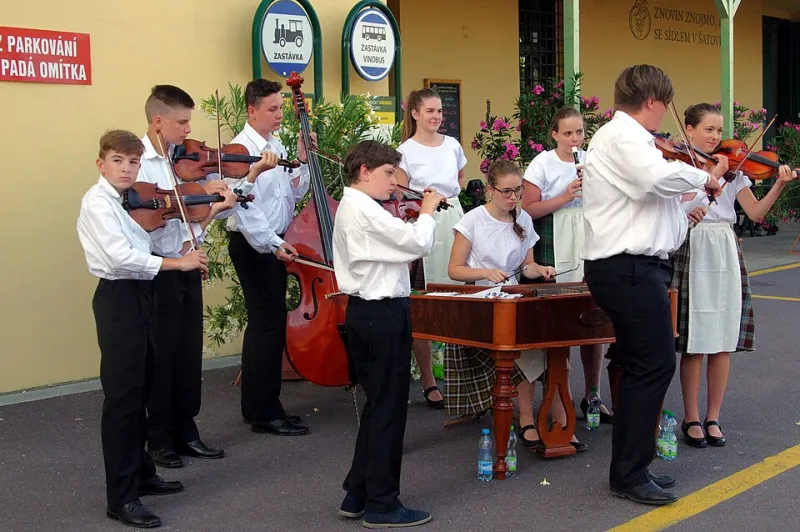
Photo: donald judge, CC BY 2.0, via Wikimedia Commons
There’s a moment in every fake-band storyline where the camera lingers on the amp, the drummer counts off, and the actor pretending to play bass suddenly has better stage presence than half the acts currently touring behind a sponsored playlist. In 2026, that moment is no longer just a plot device. It’s a release strategy.
Fictional musicians have escaped the shows that made them. They’re showing up on streaming services with full EPs, getting added to mood playlists, and inspiring fan accounts that post setlist predictions for concerts that cannot legally exist. The best new artist of the year might not have a driver’s license, a legal name, or a body. That hasn’t stopped anyone from arguing about their sophomore album.
The Discography Is Canon Now
A few years ago, a fake band was a joke with a soundtrack. You got one catchy song, maybe a B-side if the show was feeling generous, and a credits sequence that did the heavy lifting. In 2026, the expectation is different. If a series introduces a band, viewers want the whole mythology: the scrappy debut, the difficult second album, the bitter breakup single that sounds like it was recorded in a stairwell.
Showrunners have noticed. They’re commissioning multiple original tracks instead of one needle drop, building fictional release calendars, and treating in-universe artists like actual IP. A fake band called The Static Hearts can have a three-song EP, a grainy vinyl mockup, and a lore-accurate beef with another fake band from a different streaming service. That’s not a soundtrack anymore. That’s a rollout.
And audiences are responding because the barrier to entry is delightfully low. You don’t need to know the drummer’s real name or whether the lead singer is secretly feuding with the bassist. You just need to press play. The mystery is part of the charm. It’s a fandom with training wheels and a built-in inside joke.
Why Fake Bands Hit Different in 2026
Real artists are exhausting to follow. Not because they’re bad — because the internet has turned every release into a 14-part discourse. Fake bands offer the joy of discovery without the baggage of a publicist’s notes app apology. There’s no controversial tweet from 2012. There’s no festival booking drama. There’s just a fictional lead singer with great hair and a song that sounds suspiciously like it was written by a professional songwriter who knows exactly how to make a chorus stick.
That’s the other open secret: the music is good. Studios are hiring actual artists and producers to write the fake stuff, which means the fictional band’s single is competing on the same playlists as real acts. When a song is built for a pivotal scene — the reconciliation, the breakup, the slow-motion walk through a parking lot — it’s engineered to hit. Then it gets released as a standalone track and hits all over again.
Fans are treating these discographies like genuine releases because, functionally, they are. The only difference is the artist bio says “fictional” and the tour dates say “pending legal approval.”
Merch for People Who Don’t Exist
The merch table has become the new post-credits scene. Limited-run shirts, fake tour posters, and “vintage” hats for bands that debuted eight months ago are showing up in online stores faster than you can say “brand extension.” Some of it is official. Some of it is a fan with a Cricut and a dream. All of it is weirdly sincere.
This is where fictional bands start to feel less like marketing and more like fandom doing what fandom does: building a world out of scraps. A logo on a hoodie becomes proof that the band matters. A fake tour poster becomes a shared joke. A vinyl preorder for an album that only exists in a show’s lore becomes a personality trait.
And yes, people are asking for live shows. Actual performances. Real venues. The demand is a little unreasonable, which is exactly why it’s funny. You can’t book a band that lives in a writers’ room, but you can absolutely sell out a night where the actors perform the songs in character and everyone pretends it’s normal. Several 2026 productions have already tested the waters with one-off events, and the response suggests audiences will accept a lot of things — including a lead singer who is visibly reading lyrics off a monitor — if the vibe is right.
The Live Show Problem
The tricky part is that fictional bands are designed to be perfect. They don’t have off nights. They don’t get tired. They don’t have to explain why the bassist missed soundcheck because of a dental appointment. A real-life performance risks breaking the spell.
But 2026 audiences seem willing to meet the illusion halfway. They’re not asking for a flawless concert. They’re asking for a shared event. The success of these experiments depends less on vocal chops and more on whether the room agrees to play along. If the crowd screams at the right moment and the actor commits to the bit, the fantasy holds.
Showrunners are now writing songs with that afterlife in mind. The goal isn’t just a memorable scene. It’s a track that can survive the end credits, land in a playlist, and make someone search “does this band actually exist?” at 1 a.m.
The New Rules of Fake-Band Fandom
The fake band used to be a punchline. In 2026, it’s a launchpad. The best ones are built with enough detail to reward the curious, enough mystery to keep the joke alive, and enough genuine songcraft to make the whole thing work outside the show.
So the next time your group chat argues about whether a fictional drummer could beat a real one in a fight, remember: somewhere, a showrunner is taking notes. The band isn’t real. The streams are. And the merch drop is already in the works.