The Screenshot Is the Script: Why 2026 TV Scenes Come Pre-Cropped for Your Feed

There’s a moment in almost every 2026 streaming drama where the camera holds a beat too long, the dialogue lands a little too neatly, and you can practically hear a phone screen recording in the next room. It’s not an accident. It’s architecture.
Somewhere between the writers’ room and the edit bay, television has started storyboarding for the share sheet. The result is a season of shows that feel less like a slow build and more like a series of beautifully lit loading screens—each one hoping to become your next 14-second obsession.
The New Pilot Is a 14-Second Clip
Ask a showrunner in 2026 what the hardest scene to write is, and you’ll get the same answer: the one that has to work without context. A clip-first scene needs a thumb-stopping first frame, a line that fits in a caption, and a clean emotional landing before the loop resets. It is part storytelling, part billboard design.
You can spot these scenes from orbit. Two characters stand in a hallway. One says something devastatingly quotable. The other pauses, blinks, and delivers a reaction that will be screenshotted by tomorrow morning. The lighting is moody but not too dark. The audio is crisp. The background is just vague enough to avoid spoilers. It’s a TV scene, but it’s also a template.
The telling detail is how often the dialogue sounds like it was written for the comments section. Not bad, exactly—just unusually portable. Lines arrive pre-packaged with a caption energy: he said what at brunch? the audacity of this man. me explaining my five-year plan to my dog. When a character says something that could be embroidered on a throw pillow, you’re not imagining things. You’re watching the script do its second job.
Showrunners Are Storyboarding for the Share Sheet
The production pipeline has changed to match. Table reads now come with an unofficial clip check: Which moment gets the push? Which line is the screenshot? Which cliffhanger lands just under the 60-second mark so it can be clipped, looped, and reposted without a five-minute preamble?
Editors cut vertical-safe versions of key scenes. Composers write stingers that sound good on a loop. Marketing teams ask for three “moments” per episode the way they used to ask for a poster. Some shows even build in a mini-recap at the top of a scene—a tiny “previously on” for people who will encounter the moment with zero context and a lot of opinions.
It’s not entirely new. TV has always wanted a watercooler moment. But the watercooler is now a feed, and the feed has the attention span of a caffeinated squirrel. In 2026, a show doesn’t just need to be good. It needs to be clippable. Ideally before the second act.
What We Gain: A Faster, Weirder Watercooler
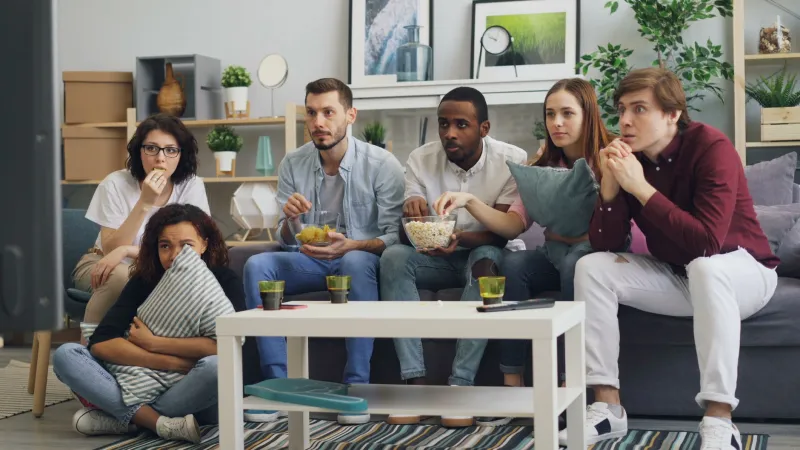
Here’s the generous read: clip-first TV has made fandom faster, funnier, and more accessible. A show can be discovered in nine seconds and loved over 42 minutes. A single reaction shot can drag a new viewer into a whole season. Group chats no longer need a synopsis; they need a timestamp.
There’s a real pleasure in a shared shorthand. When a line hits, everyone knows it. The quote becomes a password. The reaction image becomes a mood. The clip becomes a tiny cultural unit that travels farther than a review ever could. For smaller shows, that’s not a compromise—it’s a lifeline.
And honestly? Some of 2026’s best scenes are engineered and effective. A great clip-first moment can still have craft. The camera work is sharp, the performances are precise, and the writing lands because someone bothered to make the punchline mean something. The trick isn’t avoiding the clip. It’s making the clip earn its place.
What We Lose: The Slow Burn Gets Voted Off the Island
The less generous read is that we’re training ourselves to expect a payoff every 30 seconds. When every scene is a potential bumper sticker, the quiet scenes start to feel like filler. The four-minute dialogue sequence—the one that lets two characters sit in uncomfortable silence and actually change—becomes a scheduling risk. The slow burn gets voted off the island because it doesn’t generate a thumbnail.
You can feel the strain in shows that overdo it. Every episode ends on a gasp. Every conversation has a mic-drop line. Every character is three quips away from a merch drop. It’s the TV equivalent of a jump scare every half-minute: eventually, you don’t feel thrilled. You feel bullied.
The bigger loss is texture. Real conversations are messy, meandering, and full of dead air. Clip-first writing sandblasts that away. What’s left is shiny, efficient, and weirdly frictionless—a version of human behavior that exists mainly to be paused, cropped, and captioned.
The Cliffhanger Is Now a Marketing Department
The cliffhanger has been especially affected. In 2026, the ideal episode-ending tease is short enough to loop and vague enough to argue about. It doesn’t just set up next week; it sets up next week’s discourse. The result is a season that can feel like a series of escape rooms, each one designed less to satisfy than to keep you refreshing the feed.
That’s not always bad. A well-timed cliffhanger is a beautiful thing. But when every episode ends on a gasp, the gasp loses value. The audience starts to anticipate the manipulation. You can almost hear the writers’ room asking, Is this a moment, or is this a marketing department? The best shows know the difference. The rest end up with a finale that feels like a 90-minute trailer for a season that hasn’t been greenlit yet.
So Who’s Actually Winning?
The honest answer is: it depends on the show. The best 2026 series treat clips as a byproduct, not a blueprint. They write scenes that could travel, then let them travel. They don’t sand down every edge to make the crop look good. They understand that a great moment is great because it belongs to something—not because it’s been surgically extracted from it.
Audiences, meanwhile, are getting exactly what we asked for. We wanted convenience. We wanted speed. We wanted a show that could fit between two text messages and still make us feel something. We got it. The trade-off is that we now expect every story to arrive pre-cropped, pre-captioned, and pre-approved by the algorithm.
That’s the deal with clip-first TV. It gives us a faster watercooler and a shorter attention span. It gives us moments that are engineered to be shared, and sometimes—when the writing is good enough—moments that are worth sharing. The For You Page is a hell of a writing partner. Just don’t let it take a co-creator credit.